Sabbatical Part 4: O’ahu, Hawai’i
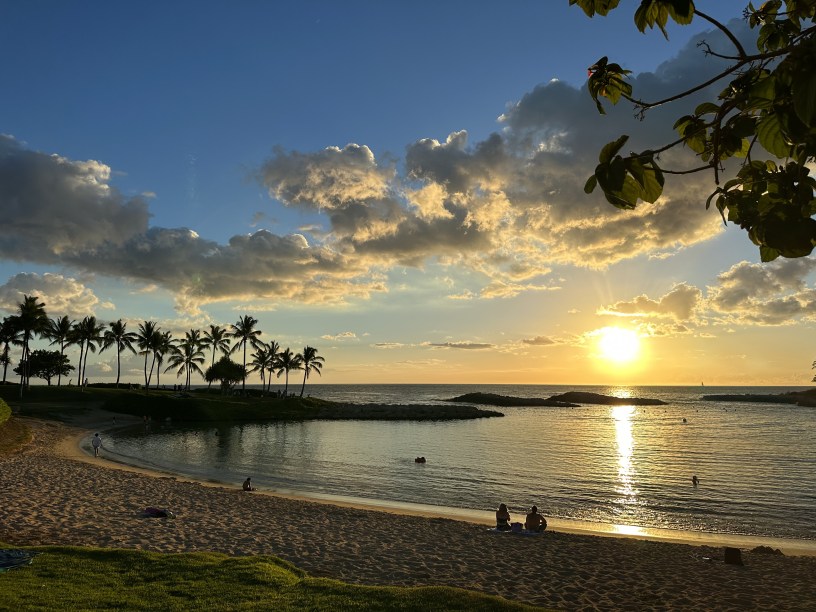
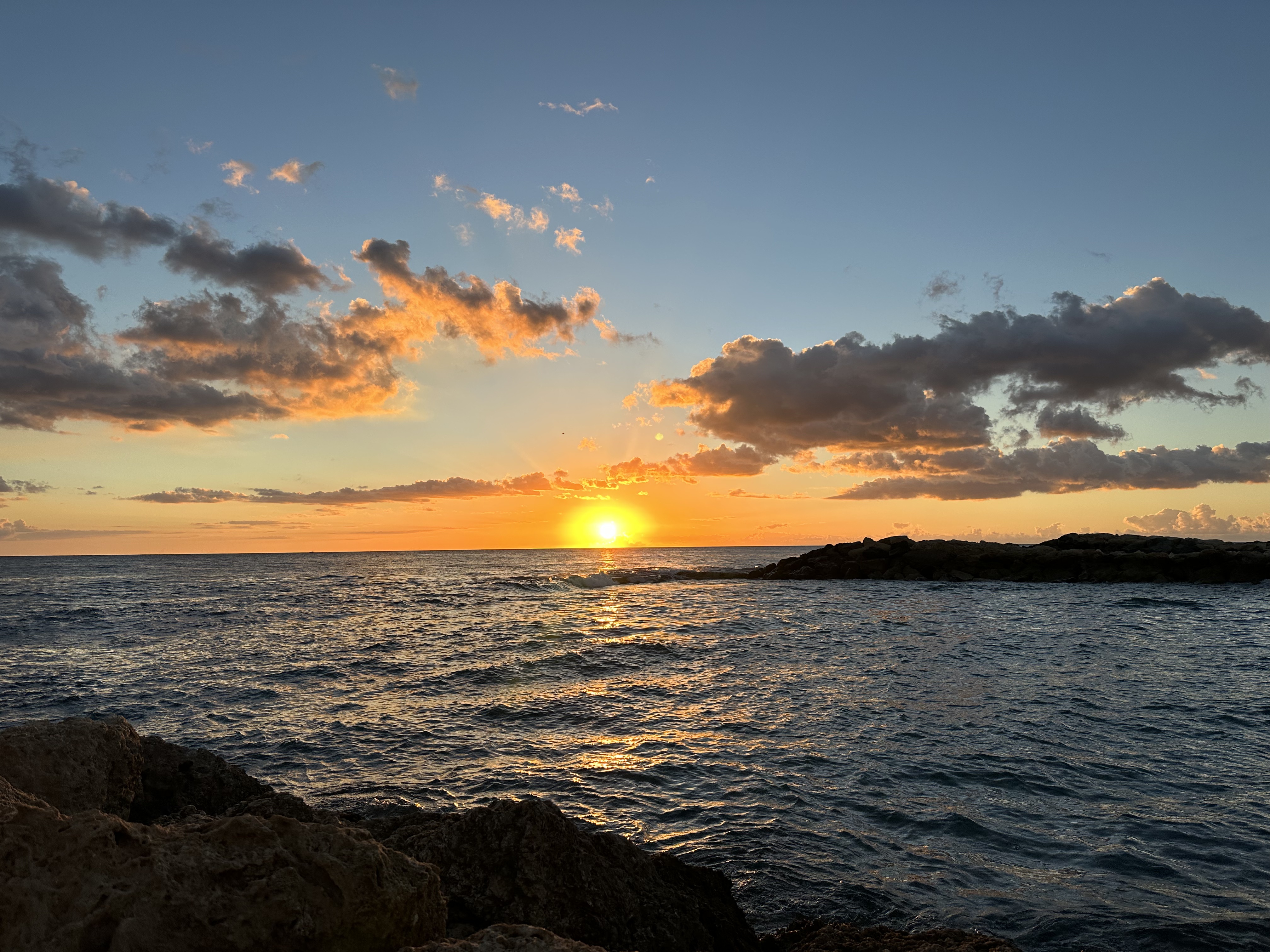
“I never met a sunset I didn’t like.”
-Author Unknown
The quote is attributed to an unknown author, but it’s a sentiment I wholeheartedly agree with—”I never met a sunset I didn’t like.” We had long planned another Hawaiian family vacation as part of this Sabbatical time. A reunion of my parents (Ohio), sister and brother-in-law (Washington), and my husband and I (Connecticut). This marked my third trip to O’ahu Hawai’i. And the Hawaiian islands remain one of the happiest (and most beautiful) places on earth in my book.
I do my best to be a respectful visitor to Hawai’i. The truth is that the Hawaiian economy is dependent on tourism, but overtourism and the disrespectful behaviors that sometimes come with overtourism can wreak havoc on local people who call Hawai’i home. There was an excellent article in Vogue by Annie Daly where she interviewed Native Hawaiians: “How to Travel to Hawaii More Mindfully, According to 7 Native Hawaiians” and there is much wisdom to glean from their comments. Kainoa Daines stated in the article, “When you travel anywhere in the world, including Hawai‘i, you’re a guest in someone else’s home, and it’s necessary to consider their values, traditions, and culture just as importantly as you would your own.”*
I lived in Lexington, Massachusetts for six years and have some sense of the place one calls home also being a place where tourists come to visit. (Obviously far less than folks visit the Hawaiian islands). At certain times of the year though, busses full of tourists would disembark on the Lexington Battle Green right in the center of town. On Patriots’ Day specifically (the third Monday in April), tourists descend upon Lexington to witness the re-enactment of the Battle of Lexington, fought on April 19, 1775. Moreover, many New Englanders contend with “leaf peepers” who come to visit during peak fall foliage when the colors all around can be stunning. Just at the time of year when it would be nice to have the beauty all to ourselves, there are visitors hoping to see the beauty for themselves.
It is important to remember that when we travel, we are guests in someone else’s home.
And the history of Hawai’i (including the overthrow of the Hawaiian monarchy and the awful effects of colonialism to this day) make the situation far more complicated.
It is certainly understandable that some Native Hawaiians have called for tourists to not visit at all.
In light of the Maui wildfires especially, I contemplated our presence as guests in someone else’s home more than ever. It can change one’s perspective (not to mention one’s words and actions) when taking that concept to heart. And with Maui, it’s even more complicated now. Just a few days ago, there was an article on CNBC reporting on the Hawaiian Tourism Authority calling on tourists to visit Maui again (while avoiding West Maui of course) because unemployment claims have surged after the wildfires.* There are unsettling economic effects following this natural disaster. Yet the truth is that this is now a place full of hurting people who may have survived a traumatic event while some loved ones did not.
Perhaps we keep in mind the Golden Rule that Jesus taught, to do unto others as we would have them do unto us.
Treat other people the way you would want to be treated.
How would you want people to behave when coming to visit if your family just survived a tragedy?
Let’s remember that anytime we travel, we are the guests in someone else’s home.
Love to all.
*Annie Daly, “How to Travel to Hawaii More Mindfully, According to 7 Native Hawaiians” in Vogue, February 23, 2023, https://www.vogue.com/article/hawaii-mindful-travel-guide
*Spencer Kimball, “Hawaii calls for tourists to visit Maui as unemployment claims surge after deadly wildfires,” CNBC, August 25, 2023, https://www.cnbc.com/2023/08/25/hawaii-calls-for-tourists-to-visit-maui-as-unemployment-claims-surge.html
Photos by Rev. Lauren Ostrout


 Lauren Ostrout ~ on being made well