“The Lord Gives” Colchester Federated Church, August 25, 2024, Fourteenth Sunday after Pentecost (Psalm 84)
This morning, we hear some beautiful words from the Psalmist—words that put people into touch with God. This Psalm is about the Temple and about folks who took a pilgrimage to meet God in that holy place. Perhaps the opening line, “How lovely is your dwelling place, Lord of heavenly forces” was uttered when a pilgrim first caught sight of the glorious Temple in the holy city of Jerusalem.[1] The pilgrim can’t help but pour out their heart in gratitude, “My very being longs, even yearns, for the Lord’s courtyards. My heart and my body will rejoice out loud to the living God!”[2] It’s an overwhelming moment and we can feel just how transformative it must have been for a pilgrim to experience.
Though it’s interesting because even as the Psalmist gazes with wonder upon the Temple in Jerusalem—an ornate and impressive building made with human hands—the Psalmist notices that there are other beings present in this holy place. In a tender moment of recognition, we hear, “Yes, the sparrow too has found a home there; the swallow has found herself a nest where she can lay her young beside your altars, Lord of heavenly forces.”[3] I just love this—this acknowledgement of the other beings in the sacred space of the Temple. The Psalmist notices that birds (and probably priests) actually live in this holy place. These lines in Psalm 84 are a reminder that we share the Earth with God’s creation—the sparrow and the swallow are right there beside God’s altars because this holy place is also their home.
Psalm 84 and this lovely recognition that we share the air and the water and the Earth with God’s creation can help us consider the importance of our modern environmental movement. For instance, it’s worth remembering the origins of Earth Day because history can ground us even as we move into the future.[4] Earth Day is always April 22 and marks the birth of the modern environmental movement begun in 1970. Rachel Carson published Silent Spring in 1962 which made connections between pollution and public health. We may take those connections for granted these days, though Rachel Carson raised public awareness about the concern we need to have for the beings in the more-than-human world. Specifically, she wrote about the effects of the pesticide DDT and how spraying for mosquitoes was killing off birds in alarming numbers and making people sick. The sparrow and the swallow that the Psalmist noticed in the Temple? DDT was wreaking havoc on bird populations. Rachel Carson wrote, “How could intelligent beings seek to control a few unwanted species by a method that contaminated the entire environment and brought the threat of disease and death even to their own kind?”[5] That intellectual understanding of the environment and human actions that effect our lands helped usher in this new movement.
Along came Gaylord Nelson a Democratic Senator from Wisconsin who had witnessed a terrible oil spill in Santa Barbara. Nelson was inspired by the student anti-war movement and thought that he could use their energy plus the public awareness already being raised about air and water pollution to force environmental protection onto the political agenda nationally. Senator Nelson announced that there would be a “national teach-in on the environment” and then asked Republican Congressman Pete McCloskey to serve as co-chair with him and Denis Hayes from Harvard to be the national coordinator. Let’s note that Democrats and Republicans worked together for the good of the environment in the beginning of this movement for change. The environmental movement didn’t begin as a partisan issue. And back in the day people could work together across the aisle—what a concept! Anyway, Hayes recruited 85 people to help promote events for this teach-in and they chose April 22 because it fell between Spring Break and Final Exams.
So, on April 22, 1970 there were approximately 20 million Americans who demonstrated for a healthy, sustainable environment. There were protests and rallies throughout the country. Groups that had been fighting individually against oil spills, polluting factories and power plants, toxic dumps, pesticides, the loss of wilderness, and the extinctions of wildlife realized that they would be more powerful if they came together than if they remained apart. That first Earth Day was about political alignment—Republicans and Democrats participated as well as people of various classes, from the city and the country, business leaders and labor leaders. By the end of that year the Environmental Protection Agency was created and the Clean Air, Clean Water, and Endangered Species Acts were passed.
Our Christian faith has a lot to say about how we are called to protect heaven and Earth. Remember that the word “dominion” gets used in the Creation Story in Genesis and in Psalm 8 (for example) when speaking about the relationship we human beings are to have with creation. We hear the Psalmist proclaim, “You have given them dominion over the works of your hands; you have put all things under their feet, all sheep and oxen, and also the beasts of the field, the birds of the air, and the fish of the sea, whatever passes along the paths of the seas.”[6]
Dominion has several definitions. It doesn’t have to mean domination. In actuality, we are talking about being responsible with and for the Earth. Why? Because human beings reflect God’s nature, we resemble God, we possess the likeness of God. Suffice it to say that “dominion” can point to stewardship.
To be a steward means to manage people’s property, finances, or other affairs. When we are God’s stewards, we’re taking care of God’s creation. We’re responsible for the Earth God gives out of love for all beings. Since we humans are feeling and thinking beings, then maybe we have a unique responsibility to care for the Earth and for the beings in the more-than-human world with whom we share the Earth. We are called to be good caretakers, called to be co-creators with God and to help God mend the world.
Moreover, there’s this beautiful concept in Judaism called tikkun olam—that human beings participate in the drama of mending the world. We can’t passively sit on the sidelines and expect others to fix the problems that we see, not when we are called to be active co-creators with God. Some would say that God is Light and Love. In the act of Creation, God diminished God’s own self. God spread Light and Love out into the world, gifting each one of us the Divine Spark—being made in the very image and likeness of God. God needs us. We need God. There’s a relationship present here.
When we help God mend this beautiful world of ours, we spread some of that Light and Love and give these gifts back to God! Greg Mobley (my Old Testament professor) describes tikkun olam by writing: “Before time, the blinding Infinite Light exploded into a billion sparks . . . this creation of the many left the One diminished. It is the sacred duty of every person to let his or her [their] little light shine, shine, shine, one good deed at a time, and thus restore the full brilliance of the Light of Lights.”[7]
That’s the thing about our place in the universe as contemplated by the Psalmist—it’s such a huge concept that it’s hard to consider our place in the story and what we can possibly do to make a difference. That’ why tikkun olam can be really moving. When we let our little lights shine one good deed at a time, maybe we are restoring the brilliance of God. We are living into the idea that we are created in God’s very image and we have been entrusted with caring for our Earth. We can protect the sparrow and the swallow, all creatures of our God and King. Because “Yes, the sparrow too has found a home there; the swallow has found herself a nest where she can lay her young beside your altars, Lord of heavenly forces.”[8] Thanks be to God. Amen.
[1] Psalm 84:1, CEB.
[2] Psalm 84:2, CEB.
[3] Psalm 84:3, CEB.
[4] The History of Earth Day, http://www.earthday.org/about/the-history-of-earth-day/|
[5] Rachel Carson, Silent Spring.
[6] Psalm 8:6-8, NRSV.
[7] Greg Mobley, The Return of the Chaos Monster—and other Backstories of the Bible, 82.
[8] Psalm 84:3, CEB.
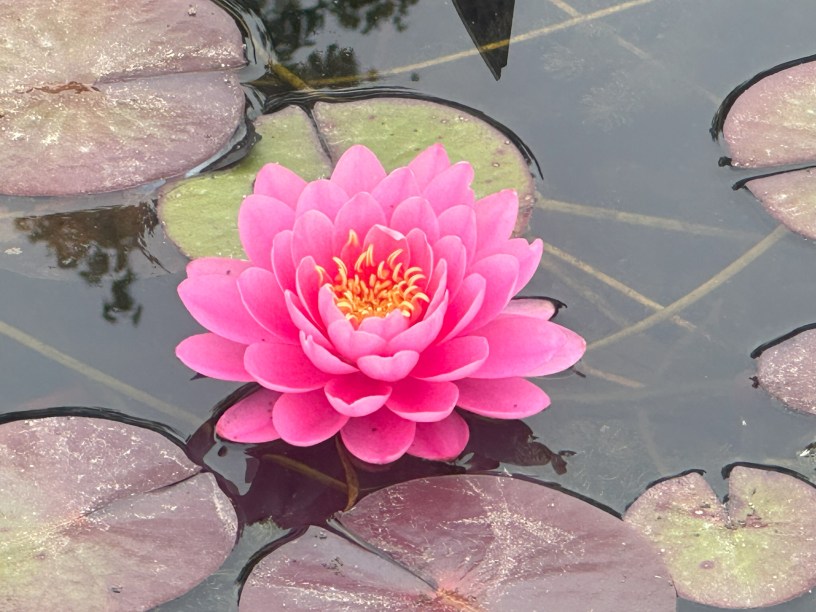
Photo by Rev. Lauren Ostrout
 Lauren Ostrout ~ on being made well