“Confessing & Healing” Colchester Federated Church, September 29, 2024, Nineteenth Sunday after Pentecost (James 5:13-20)
We have come to the end of our exploration of the Letter of James. Over the month of September, we’ve considered wisdom shared along the way. Because it is helpful to think of the Letter of James being within the Biblical tradition of Wisdom Literature like Job, Ecclesiastes, and the Song of Solomon. We remember that James of Jerusalem advised the earliest followers of his brother Jesus to be quick to listen, slow to speak, and slow to grow angry. James challenged the community that faith is dead when it doesn’t result in faithful activity. We have been reminded of the necessity of putting our faith into action. James shared how difficult it is to tame our tongues because with our tongues we can both bless God and curse people. Finally, James warned us about how dangerous envy can be to our souls. Because wherever there is jealousy and selfish ambition, there is disorder. That green-eyed monster of envy has a way of consuming us, and we are meant for so much more.
Today James leaves us with final instructions. These are instructions about prayer and confession, about forgiveness and healing. James writes, “If any of you are suffering, they should pray. If any of you are happy, they should sing. If any of you are sick, they should call for the elders of the church, and the elders should pray over them, anointing them with oil in the name of the Lord.”[1]
It’s interesting that some of the same things we worry about today were obviously of concern to James and his community. We sometimes suffer. We are sometimes happy. Sometimes we get sick and sometimes we worry about our health and the health of those we love. Sometimes we sin—we become separated from God, from one another, and from who God is calling us to be. We mess up. We seek forgiveness or to forgive someone who hurt us. We can be honest about our shortcomings. We confess what we have done wrong to another.
Sometimes we think of prayer as so formal. We think of prayers said in churches or temples or mosques by religious professionals. Not trying to preach myself out of a job this morning, but clergy are not professional pray-ers and so everyone else is off the hook! Remember we’ve been spending weeks with James and his challenge to put our Christian faith into action, otherwise what’s the point of any of this?
Or sometimes when we think of prayer, the more formal prayer that James shares about the elders gathering to pray over someone who is sick and anoint that person with oil in the name of the Lord comes to mind. Sure, a religious professional praying with a congregation in a house of worship and lay leaders praying with someone who is sick and anointing them are ways to pray. Yet James begins these final instructions with, “If any of you are suffering, they should pray.”[2] That can easily translate as everyone should pray. Because I don’t know a single person who has never experienced suffering in some form or another. This can also remind us of Paul’s instruction to “pray without ceasing.”[3]
Over the years of my ministry, I have come to deeply admire Celtic Christianity partly because this stream of our faith tradition offers a lovely alternative to the stuffy formality we sometimes encounter in organized religion. One good example of this is the Celtic way of prayer. A scholar of Celtic Christianity named Esther de Waal wrote a wonderful book called The Celtic Way of Prayer: The Recovery of the Religious Imagination. She writes about prayers cast wide in the Celtic tradition, opening up circle after circle and coming out of a sense of family, extended family, and household. Esther de Waal reflects, “Here are ordinary lay people like myself living extremely busy lives, and yet prayer is the undercurrent of whatever they are doing. It was entirely unselfconscious, of course, and that was part of its strength. Here is a life of dance and celebration and not at all pious and solemn, a life lived close to God just as it was close to neighbors and to the natural world.”[4]
There was a Scot named Alexander Carmichael who assembled prayers, songs, poems, and blessings that were orally passed down from generation to generation. These prayers are what modern scholars like Esther de Waal study. Eventually Alexander Carmichael published the anthology in 1900—the Carmina Gadelica, and it remains the most complete anthology of the Celtic oral tradition ever assembled. Carmichael observed peasants in their huts in the Scottish Highlands and islands in particular listening to and transcribing the poems and prayers, songs and blessings that were uttered throughout the day. Because remember that prayer was an undercurrent of whatever they were doing. For example, there were prayers said to bless the kindling of the fire and to consecrate seed before it was sown in a field. There were prayers for milking the cow and protecting the cattle and guarding the flocks of sheep. There were prayers said before going hunting or fishing. Morning prayers were said as well as resting prayers. The people prayed when there was a new moon and a new year. Life was lived close to God and neighbors and the natural world all around them.
People survived in the sometimes-harsh landscape of the Scottish Highlands by burning peat. Peat was used to cook and heat one’s home. There was even a prayer that was said when the fire was smoored:
The sacred Three
To save,
To shield,
To surround
The hearth,
The house,
The household,
This eve,
This night,
Oh! this eve.
This night,
And every night,
Each single night.
Amen.[5]
For Celtic people, prayer was not just associated with physically going to a church building to pray. In fact, praying and living out one’s life were not set apart at all. Prayers said were about actively living out one’s faith—praying without ceasing. That’s why prayers and blessings and incantations were uttered throughout the day, every day, as people went about their often-difficult daily tasks.
One of James’ final instructions was that if any of us are suffering, we should pray. What about if any of us are rejoicing? Or raking the leaves? Or mowing the lawn? Or doing the dishes? Or vacuuming the house? Or cleaning the bathroom? Or feeding the dog? Or making dinner? Or helping our children with homework? (a lot of prayers need to be said then depending on the subject matter)! Or answering another email? Or being on hold and screaming “representative” into the phone for the fifth time?
Praying and living our lives in this world in the year of our Lord 2024 do not need to be set apart. What James and our Celtic friends show is that our Christian faith can be active and the anchor of all that we do. It’s not just about showing up to worship for one hour on a Sunday morning. Because most of our lives are spent out there way beyond these sanctuary walls here at Colchester Federated Church, and that’s good! Prayer can be that undercurrent that helps us get through the day—ancient wisdom that helps us connect and ultimately be who God is calling us to be. Thanks be to God. Amen.
[1] James 5:13-24, CEB.
[2] James 5:13, CEB.
[3] 1 Thessalonians 5:17, NRSVUE.
[4] Esther de Waal, The Celtic Way of Prayer: The Recovery of the Religious Imagination, pg. 74.
[5] Alexander Carmichael, Carmina Gadelica, “Smooring the Fire,” pg. 237.
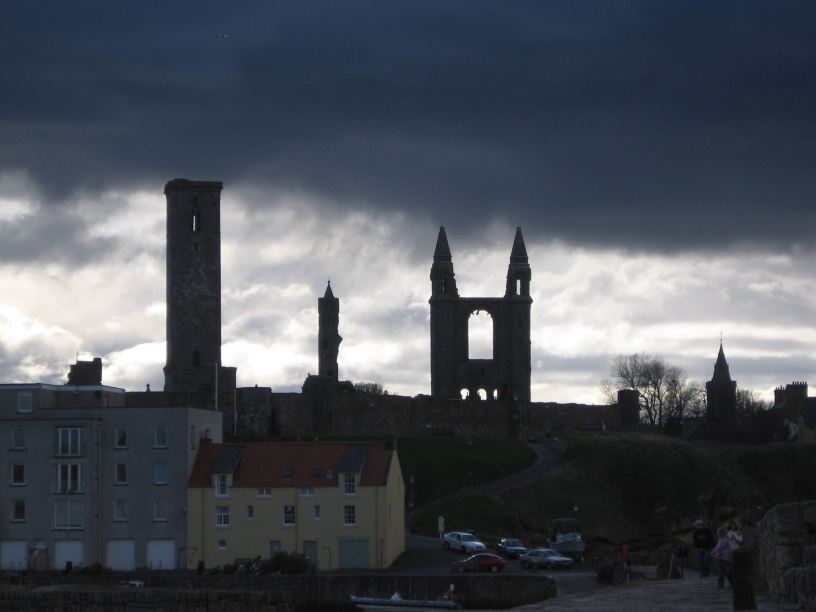
Photo by Rev. Lauren Ostrout.
 Lauren Ostrout ~ on being made well