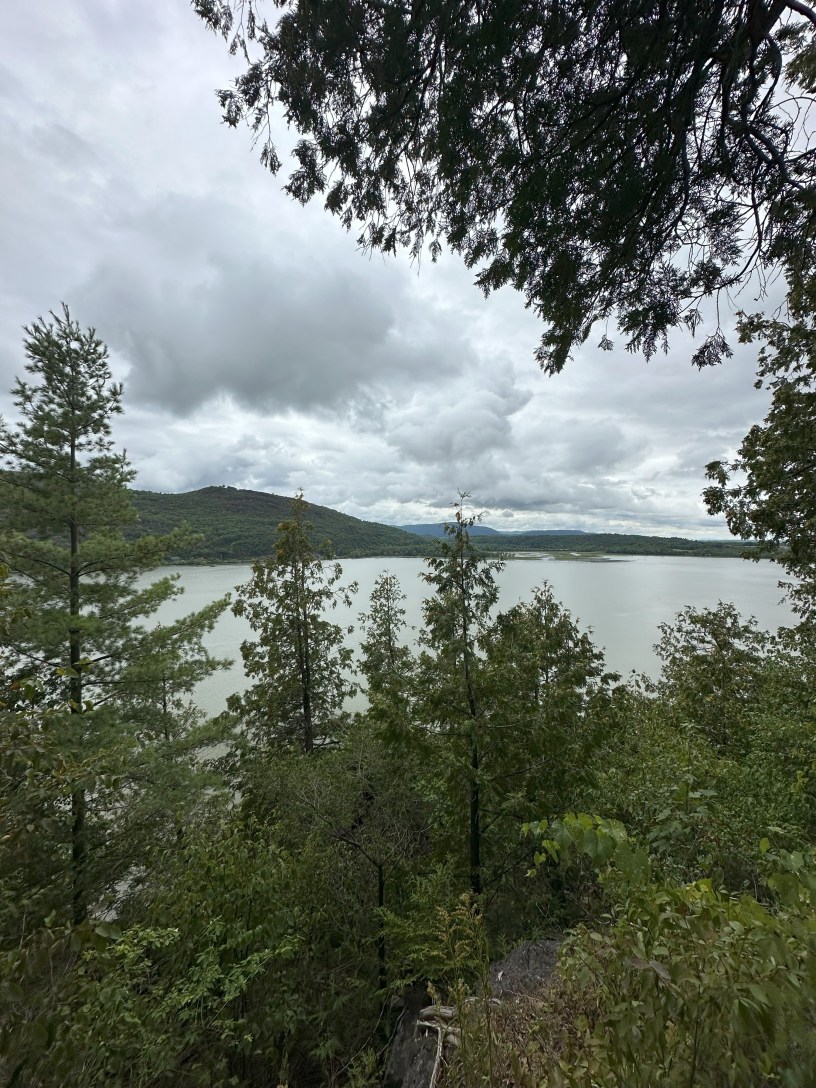
While on vacation in Vermont, we visited Mount Independence in Orwell.* It sits opposite Fort Ticonderoga on Lake Champlain. Mount Independence became an essential part of the American defense against the British attacking from Canada. In a nutshell, Ethan Allen and the Green Mountain Boys captured Fort Ticonderoga in May of 1775. Work soon began to erect a new fort right across the lake. After hearing that the Declaration of Independence was signed, the new fort was named “Mount Independence.” The first test came in October of 1776 when British ships appeared in the distance. There were 12,000 men stationed at Mount Independence and Fort Ticonderoga ready and waiting for this possibility. Sir Guy Carleton, the British commander, looked upon these two well-defended forts and decided to head on back to Canada. Mount Independence and Fort Ticonderoga accomplished their mission of the defense of the northern frontier flawlessly.
With the mission accomplished and winter now upon them, many troops headed home. Fever and smallpox broke out. It was freezing and supplies were sorely lacking. Some of the troops began to die from disease and exposure to the harsh winter. Nevertheless, the work continued with the building of a great floating bridge (an architectural marvel of the time) that connected the forts by building giant log caissons on the ice, filling them with rocks, and then sinking them as the ice melted to serve as the anchors of the bridge). They are still there at the bottom of Lake Champlain!
In June of 1777, the British (again) came from the north with a force of 7,000 sailors and soldiers under the command of General John Burgoyne. The Americans were focused on New York City at the time. Alas, only 3,000 poorly equipped men (maybe still sick and starving) were left to defend the forts. The British learned their lesson, enveloping the Americans on both sides of the lake and taking over Mount Defiance. General Arthur St. Clair looked at his options. He was undermanned and undersupplied. Bombardment was going to happen. Approaching troops were getting into position to cut off a retreat route. So, he ordered a retreat. Fort Ticonderoga’s troops quietly left in the middle of the night crossing that floating bridge to Mount Independence. It wasn’t as quiet as it could have been and there was a battle as the troops left. But some of these same troops ended up fighting at Saratoga just a few months later (a decisive victory for the Americans).
Fast forward to November of 1777—the British left Mount Independence and burned it all down to the ground.
Pretty much everything is gone.
So all of this history that I learned about and shared with you?
We have to use our imaginations to consider the events that occurred!
As one walks atop this steep cliff jutting into Lake Champlain there are only stone foundations left of the officer’s homes, only placards indicating where the hospital would have been, only pictures in a museum that show what those bridge anchors look like as they still rest on the bottom of the lake.
As for the land?
The forest has now taken over Mount Independence.
A new growth forest appearing at a place that once housed a great fort—that certainly seems holy to me.
The power of imagination and the beauty of new life is really something to behold.
Just a thought, for this week.
Love,
Pastor Lauren
*”A Brief History of Mount Independence,” Mount Independence Coalition, https://mountindependence.org/history/

Photos by Rev. Lauren Ostrout.
Thursday Thoughts 8/28/25.
 Lauren Ostrout ~ on being made well