“See how much he loved him!” Colchester Federated Church, March 22, 2026, Fifth Sunday in Lent (John 11:1-45)
On this Fifth Sunday in Lent we have another powerful story of Jesus offering new life and hope everlasting. We are moving from Nicodemus coming to Jesus at night (offered abundant life) to the Samaritan woman at the well encountering Jesus in her isolation (offered living water). Last week we heard the story of the man born blind and how Jesus healed him by spitting on the ground and making mud with his saliva, smearing the mud on the man’s eyes. For once he was blind, and then he saw (offered true sight). All these stories were life-changing for those who encountered Jesus. It must have been that their lives were forever changed as there would have been a before and an after line of demarcation. The transformation and restoration to their respective communities would have been monumental.
Though the story of the raising of Lazarus we heard today from the Gospel according to John had lasting effects on Lazarus, Martha, and Mary—Jesus’ dear friends. It is hard to think of a more dramatic before and after knowing that Lazarus had died and was placed in a tomb for four days before Jesus arrived with his command, “Lazarus, come out!”[1] Though this story was also life-changing and earth-shattering for Jesus and for those who witnessed this miraculous event. It was earth-shattering for those who heard about this miraculous event from those who witnessed it. Because word about Jesus’ power and identity as the Son of God began to inevitably spread after this miraculous sign.
The passage we heard in the Lectionary concludes with verse 45. John shares that many people who came with Mary saw and believed. Though if we continue reading just a little further, we read that after Jesus raised Lazarus from the dead the chief priests and the Pharisees and the leadership council met to figure out what to do with this man who was doing miraculous signs. What do we do with Jesus of Nazareth? John tells us that from this time onward Caiphas (the high priest that year) and the religious leaders began to plot to kill Jesus. There is an ominous undertone if we have the ears to hear and the eyes to see as we approach Holy Week. Because we may understand the raising of Lazarus as Jesus’ greatest miracle, yet it was especially threatening to those in power.
Father James Martin wrote a wonderful book about this story—Come Forth: The Promise of Jesus’s Greatest Miracle. It’s rather telling that the hardcover version of Come Forth is 369 pages. Yes, there are maps and illustrations, but still! This Gospel story really is that important and compelling. Father Martin explains that there were times in Jesus’ ministry when the burden of leading the disciples became great, and Jesus must have sought comfort and fun with friends like Mary, Martha, and Lazarus. We can read in the Gospel, “Jesus loved Martha, her sister, and Lazarus.”[2] These were Jesus’ beloved friends. Again we tend to focus on Jesus’ divinity in the Christian tradition. But this story—yes of the greatest miracle Jesus ever performed—also shows his humanity. As Father Martin reflects, “Friendship is an overlooked aspect of Jesus’s life—and the Christian life in general . . . being a friend is one of the most important things we can do, one of the most appreciated and one of the most difficult. Friendship is a real ministry.”[3] Think about those friends who have been with you through the highs and lows of your life. Friendship is a real ministry. We sometimes underestimate or ignore that Jesus needed friends. But this text shows the depth of the relationship between and among Jesus, Martha, Mary, and Lazarus.
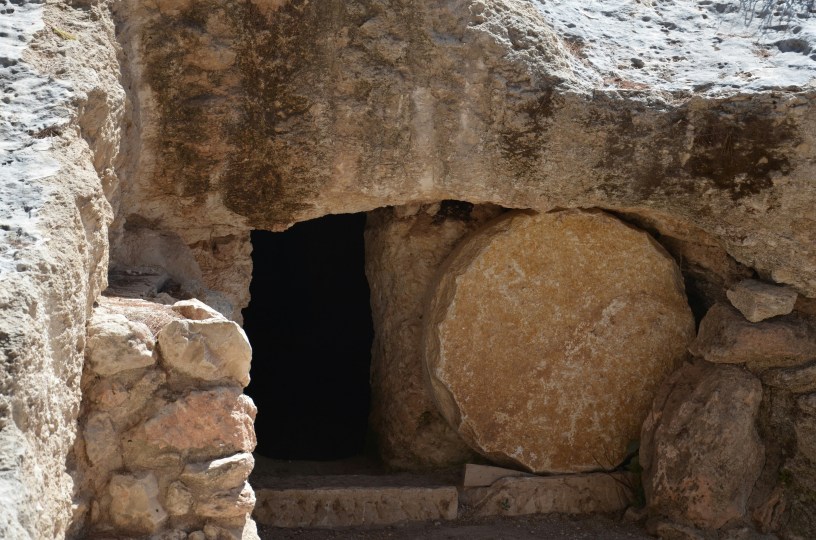
From the beginning of this Gospel story, we hear that Lazarus is ill. Lazarus is from Bethany and John tells us that Lazarus’ sister Mary is the one who anointed Jesus with fragrant oil and wiped his feet with her hair. This detail establishes the friendship among them as Jesus is clearly close with this family. They have history and a relationship. The sisters send word to Jesus, “Lord, the one whom you love is ill.”[4] Jesus delays coming to see them even though he loved Martha, Mary, and Lazarus. Because Jesus understands that all that will come to pass is ultimately for God’s glory. When Jesus approaches the family’s home in Bethany, he finds that Lazarus has been in the tomb for four days. There is even the detail that the smell would be awful when the stone is removed from the tomb.
Martha wastes no time and goes out to meet her friend Jesus. It’s hard to know if her tone at first is anger or disbelief or grief, “Lord, if you had been here, my brother wouldn’t have died. Even now I know that whatever you ask God, God will give you.”[5] Perhaps we can understand her approach as grief tinged with belief, as doubt and faith present within her. Jesus assures Martha that Lazarus will rise again and proclaims, “I am the resurrection and the life. Whoever believes in me will live, even though they die. Everyone who lives and believes in me will never die.”[6] We may recognize these moving words from funerals. These are words of promise from Jesus that have echoed across the ages ever since for our Christian community. And it’s good to remember that Jesus first uttered these words in conversation with his friend Martha before raising his friend Lazarus from death itself. Jesus uttered these words to people in grief: “I am the resurrection and the life.” Martha responds, “Yes, Lord, I believe that you are the Christ, God’s Son, the one who is coming into the world.”[7]
The story progresses as Martha has a private conversation with her sister Mary. Then Mary and Jesus have a conversation. And again, Mary echoes the words of Martha, “Lord, if you had been here, my brother wouldn’t have died.”[8] Though if Martha’s reaction might have been tinged with anger before her proclamation of faith, it seems that Mary’s reaction is tinged with sadness. John tells us that Mary is crying and the people who came with her to meet Jesus were also crying. Jesus himself becomes “deeply disturbed and troubled . . . Jesus began to cry.”[9] The depth of Jesus’ love is on full display. Perhaps he could not help but cry when seeing how much those around him are grieving the death of Lazarus. Perhaps Jesus also knew that this act of raising Lazarus from that tomb would set into motion what was to come with the opposition ramping up after performing this greatest of miracles. Perhaps it was simply looking at his friend Mary crying, this friend he loved, that broke open the floodgates within for Jesus.
As Father Martin reflects on the reaction to Jesus he wonders how any of those present could truly understand what is happening. Because God’s ways are too wonderful and too mysterious for us to fully comprehend even today. Because “Martha and Mary lived in hope, but they also lived in the real world, where dead people don’t walk out of their tombs. Once again, we are all Martha and we are all Mary, struggling to believe, struggling to hope, struggling to understand Jesus . . . This is part of the human condition, even for the devout believer: living with an imperfect faith and imperfect knowledge in an imperfect world.”[10]
We do live with imperfect faith. We live with imperfect knowledge. We live in an imperfect world. What we see with Martha in her anger and eventual faithful proclamation and Mary in her sadness are people who are doing their best to respond to Jesus on their respective faith journeys. The point is that their human reactions are not wrong or somehow sinful. There is an authenticity here in both of these women showing faith struggling to understand. There is authenticity here with Jesus himself weeping outside the tomb of his friend Lazarus, even and especially knowing in his heart all that was to come. For we will soon move from the parade in the streets of Jerusalem to the table in the upper room, from Jesus weeping in the garden to his arrest and trials and the cross, from the cross to the tomb. What wondrous love is this. Thanks be to God. Amen.
[1] John 11:43, CEB.
[2] John 11:5, CEB.
[3] James Martin, SJ, Come Forth: The Promise of Jesus’s Greatest Miracle, pg. 63.
[4] John 11:3, CEB.
[5] John 11:21-22, CEB.
[6] John 11:25-26, CEB.
[7] Luke 11:27, CEB.
[8] Luke 11:32, CEB.
[9] Luke 11:33, 34, CEB.
[10] James Martin, SJ, Come Forth: The Promise of Jesus’s Greatest Miracle, pgs. 228-229.
Photo by Jonny Gios on Unsplash
 Lauren Ostrout ~ on being made well