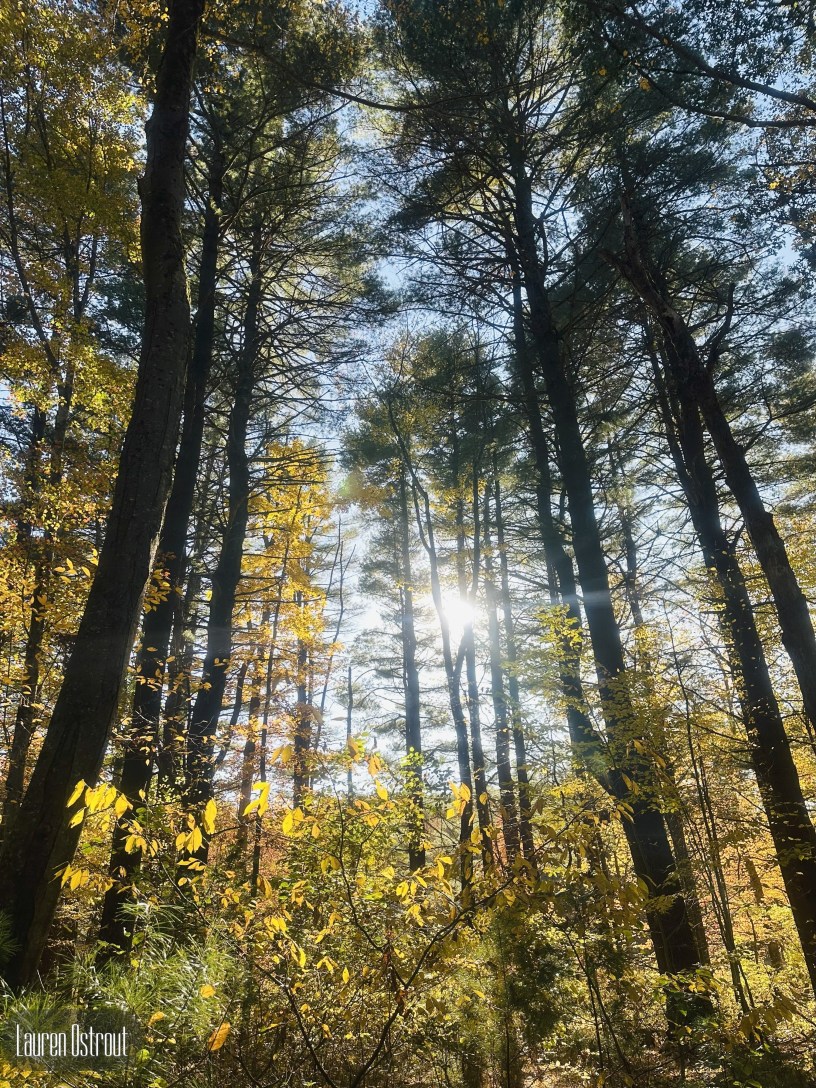
Take your busy heart to the art museum and the
chamber of commerce
but take it also to the forest.
The song you heard singing in the leaf when you
were a child
is singing still.
~Mary Oliver

Lauren Ostrout is a Certified Forest Therapy Guide.
What exactly is Forest Therapy?
Forest Therapy (sometimes called Forest Bathing) is inspired by the Japanese practice shinrin-yoku. Forest Therapy is a mindfulness practice in nature. The practice began to help address the techno-stress and related illnesses that people were experiencing because of working long hours indoors.
Forest Bathing helps lower stress, calms our nervous system, lowers our heart rate and blood pressure, and improves concentration, creativity, mood, mental health, spiritual well-being, and increases the feeling of social connection and empathy.
When we go on a Forest Therapy Walk, we intentionally take in the forest with our senses. The role of the Guide is to offer participants a slow-paced, mindful walk experience that opens up our senses through a series of nature-connected invitations.
The practice is not a traditional hike. We walk slower and in a more relaxed and mindful way. For Forest Therapy, we also do not need to go far! We use our senses to welcome all the gifts that the forest offers—the sights, sounds, smells, and energies we may feel as we journey together from place to place. Forest Therapy helps us remember that we are part of this more-than-human world and connected to all beings.

Forest Therapy & Nature Connection Resources:
- Cleveland Clinic: “Forest Bathing: What It Is and Its Potential Benefits”
- Outside: “Take Two Hours of Pine Forest and Call Me in the Morning” by Florence Williams
- Minding Nature: “Returning the Gift” by Robin Wall Kimmerer
- Greater Good in Action: Awe Outing
- YouTube: “Forest Bathing / Shinrin-Yoku / Healing in Nature / Short Documentary”
- YouTube: University of Derby “5 Pathways to Nature Connection”
 Lauren Ostrout ~ on being made well